Containment that fits the situation
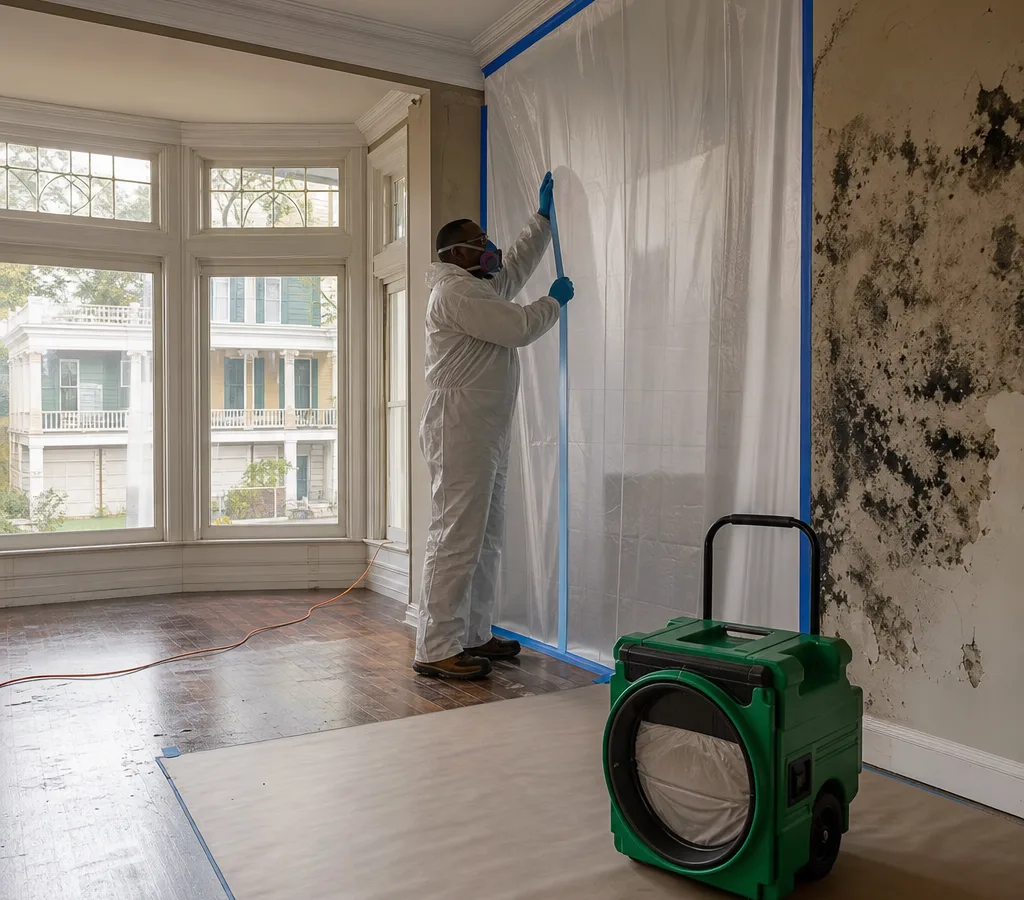
We use critical barriers, negative air pressure, and controlled access so disturbed spores stay in the work zone, not throughout the building.
Serving New Orleans, Louisiana & surrounding areas
Mon–Fri 8am–6pm · Sat 9am–2pm
Mold remediation in New Orleans
If you smell a musty odor, see staining, or had a recent leak, getting the mold handled fast matters. Our certified technicians isolate the affected area, remove contaminated materials when needed, and clean and verify the space so you can move forward with clear next steps.
Why remediation matters
New Orleans mold remediation usually starts after a plumbing leak, roof intrusion, AC condensate issue, or flooding that left building materials damp longer than they should be. In our climate, moisture can linger in wall cavities, under flooring, and inside closets long after the surface looks dry.
Mold can damage drywall, wood, insulation, and contents. It can also make a home or business uncomfortable to occupy, especially when growth is hidden behind baseboards, in HVAC returns, or around windows. The right approach is containment first, then removal and cleaning, and finally moisture control so the same conditions do not return.
Mold Removal serves New Orleans, LA 70139 with a practical, inspection-led plan. You will get a written scope, straightforward expectations about what gets removed versus cleaned, and a clear explanation of what needs to be dry before any rebuild or cosmetic repairs begin. If you are comparing providers, our team is introduced on the New Orleans mold removal overview as well.
Professional remediation standards
We use critical barriers, negative air pressure, and controlled access so disturbed spores stay in the work zone, not throughout the building.
Porous materials that cannot be reliably cleaned—often drywall, insulation, and some soft contents—are removed and bagged out under containment.
We HEPA-vacuum and damp-wipe structural surfaces, framing, and adjacent areas, then clean settled dust where needed so the space is ready for drying and verification.
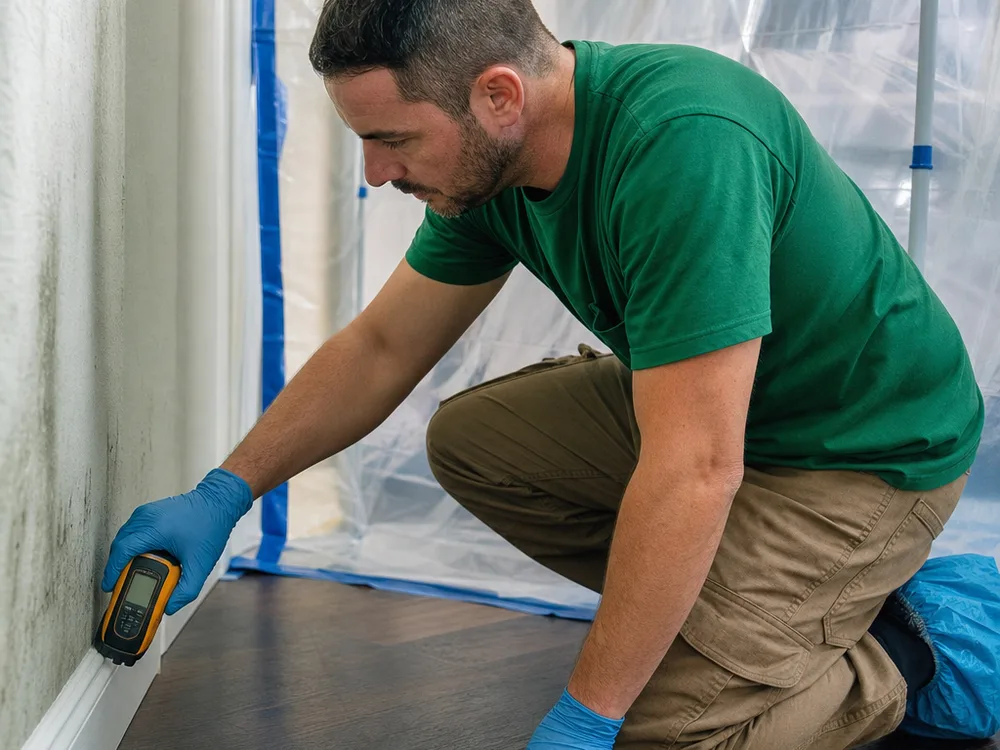
We track moisture in materials and air movement. The goal is to confirm the source is addressed and the area is dry enough to safely close walls and reinstall finishes.
When remediation happens in lived-in or operating spaces, we plan traffic paths, dust control, and daily cleanup so disruption stays manageable.
You get photos and notes that match the scope, plus guidance on what to repair next and what conditions to watch for afterward.
Inspection-led scope
Visible spots are often the tip of the problem. Mold commonly grows where humidity and limited airflow meet, or where water traveled and got trapped. In New Orleans homes, we frequently see concerns around bathrooms and laundry areas, behind vanities, around window trim, and near HVAC components that create condensation.
Our inspection focuses on likely pathways and building materials, not just what you can see. We look for water staining, swollen baseboards, soft drywall, and odors; we also check behind accessible panels and at transitions like under sinks and around exterior doors.
Local context matters. In the French Quarter and other older parts of the city, construction layers and tight cavities can hold moisture. In Gentilly and Lakeview, past storm history means it is especially important to confirm what is happening in lower walls and flooring assemblies after any water event. In Uptown, shaded areas and older windows can lead to recurring condensation that keeps trim and plaster damp. The point is not the neighborhood name; it is the building behavior and moisture pattern.
If you already have testing from an indoor environmental professional, we can align the scope to that report. If you do not, we can still build a remediation plan based on conditions on site and the industry standard steps used to contain and remove growth safely.
From assessment to next steps
Step 1 of 6
We identify the affected materials, the likely moisture source, and the appropriate level of containment. You receive a plain-language plan for what will happen first, what gets removed, and how the area will be protected.
Step 2 of 6
We isolate the work area with plastic sheeting and establish negative pressure when appropriate. HEPA filtration runs during active removal to capture airborne particles.
Step 3 of 6
When drywall, insulation, carpet pad, or other porous items are impacted, removal is often the safest path. Materials are bagged and moved out to prevent cross-contamination.
Step 4 of 6
We HEPA-vacuum and clean framing, subfloors, and nearby surfaces. If the scope includes contents, we address them using appropriate methods for the material type.
Step 5 of 6
If moisture is still present, drying continues until materials reach acceptable levels for closure. We document conditions and outline what to fix so the moisture does not return.
Step 6 of 6
We review what was done, what areas were opened, and what repair steps come next. If clearance testing is part of your plan, we coordinate timing so it can be performed after remediation is complete.
Inspection-based pricing
New Orleans mold remediation typically ranges from about $1,500 to $6,500 for many residential jobs, with small, contained areas sometimes closer to $800 to $2,000 and larger or multi-room projects reaching $7,500 to $15,000+. Cost depends on how far the growth spread, what materials are affected (drywall and insulation removal costs more than surface cleaning), access (crawlspaces and tight closets take longer), and the level of containment required. The exact price is confirmed after an on-site inspection and a written scope.
Homeowner and business feedback
“After a slow leak under the kitchen sink, the smell would not go away. The crew set up containment, removed the damaged drywall, and explained what needed to dry before closing it back up. The difference in the air quality was immediate.”
“We run a small office and needed the work done without spreading dust through the suite. They kept the area sealed, cleaned thoroughly, and gave us clear documentation for our records.”
Helpful answers
Many situations can be assessed quickly, and urgent cases are prioritized because active moisture can keep spreading the problem. The start date depends on the size of the affected area and whether water is still intruding, but the first step is always an inspection and a written scope so containment and removal are sized correctly.
Porous materials like drywall and insulation often need removal once mold growth is established, because they are difficult to clean thoroughly and may keep releasing spores. Non-porous and some semi-porous surfaces can usually be cleaned after proper containment, HEPA filtration, and detailed wipe-down.
It depends on the location and the scope, but many occupied homes can remain in place when the work zone is properly contained and access is controlled. If the affected area involves bedrooms, a main HVAC return, or a large open-plan space, we will discuss practical options to reduce exposure and disruption while the work is underway.
Mold returns when moisture conditions return, so lasting results come from both removal and fixing the underlying moisture source. In New Orleans, that often means addressing leaks, condensation, or humidity management, then confirming the affected building materials are dry enough before walls or flooring are closed back up.
Yes, when clearance testing is part of your plan, it is typically performed after remediation is complete and the area is dry and cleaned. If you already have an independent inspector, we can coordinate timing so the containment and cleaning steps align with the criteria they use.
Stop the moisture source if you can do it safely, limit airflow that could spread spores—for example, avoid running fans directly at visible growth—and avoid disturbing the material by scraping or dry-brushing. Then arrange an inspection so the scope can focus on containment, safe removal, and drying rather than surface-level cleanup.
Plan the right next step
Tell us what you are seeing and what water event led up to it, if any. We will schedule an on-site assessment in New Orleans, explain what the work will involve, and provide a written scope with practical next steps.