Rapid water removal
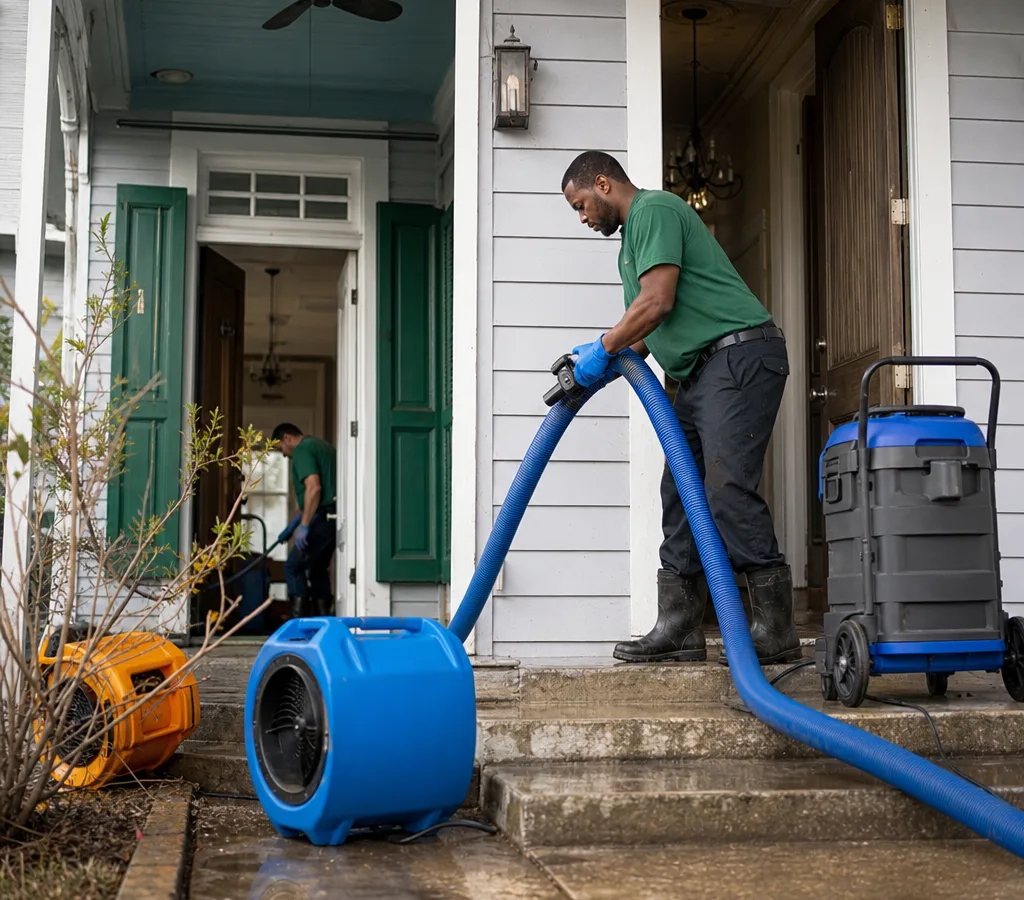
We use professional extraction equipment to remove standing water and reduce saturation fast, then set up drying to prevent water from migrating further into the structure.
Serving New Orleans, Louisiana & surrounding areas
Mon–Fri 8am–6pm · Sat 9am–2pm
Water damage restoration in New Orleans
When water gets into floors, walls, or cabinets, time matters. Our team responds fast to remove water, dry the structure, and document damage so you can move forward with a clear plan.
Stop the spread and dry correctly
Water damage restoration in New Orleans usually starts the same way: a supply line lets go, an appliance overflows, a roof leak shows up after heavy rain, or storm water gets into a ground-floor space. The water you can see is only part of the problem. Moisture wicks into baseboards, drywall, subfloors, and insulation, and that trapped dampness can turn a small incident into a much larger repair.
Our water damage restoration New Orleans service focuses on three things: stopping the spread, drying the structure correctly, and giving you a written scope you can trust. We handle residential and commercial water cleanup, and we take the time to explain what we found, what needs to come out, what can be dried in place, and what the next steps look like.
New Orleans conditions make proper drying important. High humidity slows evaporation, and older building materials in many neighborhoods can hide moisture in layers. The right equipment matters, but so does the method: mapping moisture, controlling airflow, managing humidity, and checking progress until the structure is actually dry, not just “feels dry.”
If you are dealing with water damage now, start by getting the water source shut off if it is safe, moving valuables and electronics away from the wet area, and avoiding outlets or panels in a flooded space. Then get a restoration team in quickly to assess and begin water removal and drying.
Restoration built around real readings
We use professional extraction equipment to remove standing water and reduce saturation fast, then set up drying to prevent water from migrating further into the structure.
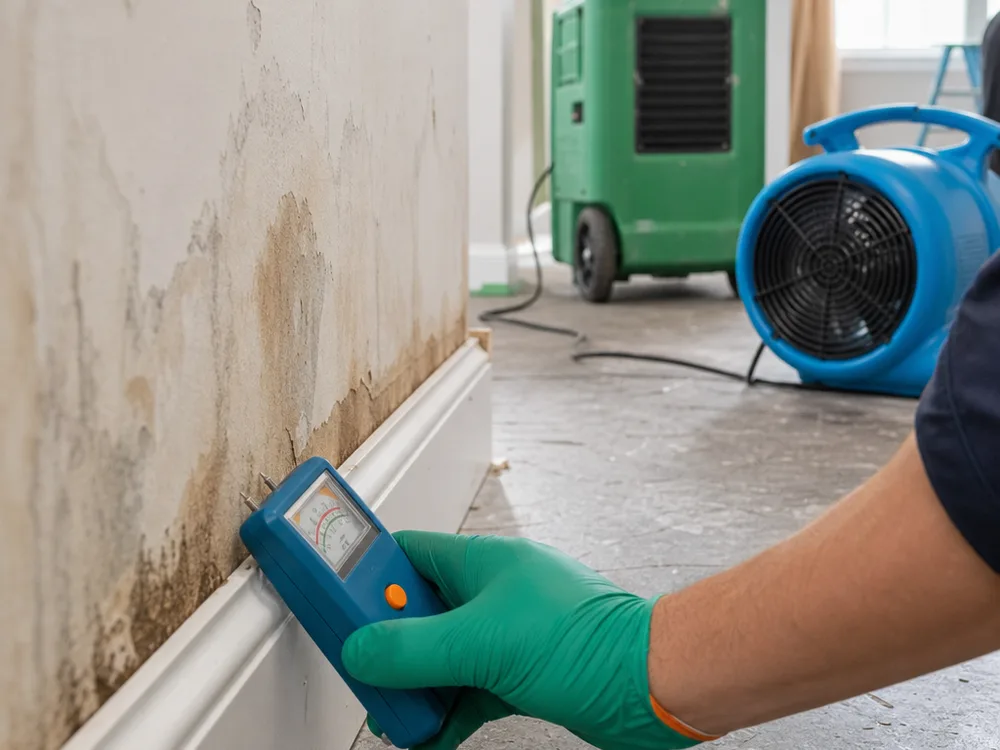
We measure moisture in affected materials and outline what is wet, what is likely impacted behind surfaces, and what that means for drying and repair decisions.
Drying is controlled, not improvised. We balance air movement and dehumidification and track progress so drywall, framing, and subfloors dry to acceptable levels.
If materials cannot be dried safely or have been compromised, we remove only what is necessary to access wet cavities and allow the structure to dry properly.
When drying is complete, we leave you with a straightforward summary of the affected areas and the repairs typically needed to put everything back.
Measured drying, not guesswork
A good restoration plan is based on what the water did to the building, not guesses. After a walk-through, we identify the category of water—clean supply water versus contaminated sources—the likely migration paths, and the materials involved. Porous materials like carpet pad and some insulation can hold water and may require removal depending on exposure.
From there, the work typically includes:
In New Orleans, humidity control is often the difference between drying that finishes on schedule and drying that stalls. We focus on creating drying conditions that pull moisture out of materials, not just moving warm, damp air around the room.
If your incident involves visible microbial growth or you suspect it after drying begins, that becomes a separate problem to evaluate. Some property owners also choose to start with a dedicated mold inspection when they are unsure whether the damage is only water or has turned into microbial contamination.
From assessment to repair scope
Step 1 of 5
We look for active leaks, electrical concerns, and how far water traveled, including adjacent rooms and lower levels. When needed, we recommend shutting down affected circuits until the area is safe.
Step 2 of 5
We remove standing water, pull back or remove impacted materials when appropriate, and stabilize the environment so additional damage slows down right away.
Step 3 of 5
We set equipment based on readings and room conditions. The goal is controlled airflow and dehumidification that actually lowers material moisture, not just surface drying.
Step 4 of 5
We revisit to take readings, reposition equipment, and confirm drying is progressing. This step prevents stalled drying, which is common in humid conditions.
Step 5 of 5
After drying targets are met, we document what was affected and what the restoration work supports next, including any rebuild items that remain.
Inspection-based pricing
Water damage restoration in New Orleans typically ranges from about $1,200 to $6,500+, with small, contained clean-water incidents often landing near the low end and multi-room saturation, contaminated water, or major demolition and rebuild needs pushing costs higher. A single wet room with limited extraction and 3 to 5 days of drying often falls around $1,500 to $3,500.
Final pricing depends on how much area is wet, what materials are affected—drywall, insulation, hardwood, or cabinets—how long the water sat, the water category, access for equipment, and whether selective demolition is required to dry wall cavities. The exact cost is confirmed after an on-site inspection and moisture mapping.
Property owner feedback
“A supply line under our sink failed while we were out. They got the water out fast, explained what had to be removed, and kept checking moisture until it was actually dry. The written scope made the next steps with repairs much easier.”
“We had water in our office after a storm and needed it handled without turning the place upside down. Their team set up drying quickly, kept the area organized, and communicated clearly about timelines.”
Helpful answers
You should start water damage restoration as soon as you can safely do so, ideally the same day. The longer materials stay wet, the farther moisture migrates into drywall, trim, and subfloors, and the harder it becomes to dry without removing materials.
Any active leak, standing water, water near electrical outlets or panels, or water affecting ceilings and upper floors should be treated as an emergency. In a humid climate, even a small overflow can quickly saturate surrounding materials and require more invasive work if it is left overnight.
Not always. If materials are clean-water affected and can be dried to acceptable moisture levels with access and airflow, they may be salvageable. Drywall that has wicked water high, insulation that is saturated, or materials exposed to contaminated water often require removal so the wall cavity can dry properly.
Most structural drying takes 3 to 5 days, but it can be longer depending on how much water was absorbed, the materials involved, and indoor humidity. We track progress with moisture readings so the end point is based on the structure, not a guess.
Fans and air conditioning can help with surface moisture, but they often miss trapped water in wall cavities, under flooring, and in subfloors. Professional restoration uses moisture mapping and controlled dehumidification to dry hidden areas and confirm drying with measurements.
Yes. The core steps are similar, but commercial projects often need tighter containment, equipment placement that keeps walkways safe, and documentation that supports facility and insurance requirements.
Start drying the right way
Tell us what happened and what areas are wet. We will assess the damage, start water removal and drying, and give you a clear scope for what it takes to restore the property in New Orleans, LA 70139.